
Toddler Routines For Beginners

📖 Table of Contents
- The 20-Minute Morning Framework That Actually Works
- Building a Visual Schedule Your Toddler Can 'Read' Before They Can Read
- The Bedtime Sequence: Same Six Steps, Every Night
- Handling Transitions Without the Meltdown
- When Routines Fall Apart: Travel, Illness, and Daylight Saving Time
- Make It Your Way
- Frequently Asked Questions
- The Printable Activity Plan
At 7:12 on a Tuesday morning, I was on my knees in the hallway holding one blue sock and one green sock while my son Milo, then two and a half, lay flat on the floor screaming that he wanted "the red shirt" — a shirt that was, at that exact moment, in the wash. We were nine minutes from needing to leave for daycare drop-off and I had a 9 a.m. Call I could not miss. That morning ended in tears (mine, eventually, in the car) and it's the reason this site exists. For the full picture, see toddler routines — our complete hub on the topic.[1]
I've spent the four years since then building, testing. Rebuilding routines with Milo and later his sister Junie, and I've talked to well over 200 parents in our reader community about what actually holds up on a Tuesday morning versus what only works in a blog post's imagination. If you're searching for toddler routines for beginners because your mornings, meals, or bedtimes feel like they're being negotiated from scratch every single day, you're not doing anything wrong — you just haven't installed the scaffolding yet. That's a completely different problem with a completely learnable fix.[2]
This guide is the actual system I use now: the six-step bedtime sequence, the three-card morning framework, the visual schedule I built for $6 in supplies. The specific mistakes that cost us months of frustration before we corrected them. I'm going to give you real numbers — minutes, costs, day counts — because vague advice like "stay consistent" never once helped me at 7:12 a.m. With one sock in each hand.[3]
Why You'll Love This Routine System
- Cuts our morning transition time from 38 minutes of negotiation to a consistent 20 minutes within three weeks
- Uses picture cards toddlers as young as 18 months can 'read' independently, no literacy required
- Costs under $10 in supplies — index cards, a marker, and clear contact paper
- Includes the exact bedtime sequence (six steps, same order, every night) that ended our 90-minute stall-outs
The 20-Minute Morning Framework That Actually Works
As of August 2026, the framework that finally worked for us has exactly three phases, and I named them so Milo could say them himself: Body, Fuel, Door. Body covers getting dressed, brushing teeth, and a potty stop. Fuel is breakfast, eaten at the table, no exceptions. Door is shoes, jacket, and backpack, done in that order because shoes-then-jacket is easier for small hands than the reverse.
We laminated three index cards with a simple drawing for each phase and velcroed them to a strip of cardboard at Milo's height, about 30 inches off the ground. Each morning he flips a card face-down when that phase is done, and flipping the card became almost more motivating than the reward at the end. Within nine days he was flipping cards without being asked.[4]
The real unlock was timing: we stopped trying to compress the routine and instead built in a fixed 20-minute window starting at the same clock time every day, alarm on my phone included. Consistency of start time mattered more than the length — kids as young as two can anticipate a routine that always begins at 7:00 a.m. Far better than one that starts "whenever we're ready," which to a toddler means never.[5]
Lay out the exact outfit, socks, and shoes the night before, on the floor in the shape of a person if your toddler is under three. Removing every decision point in the morning cut our arguments by roughly half — decisions, not defiance, were the real bottleneck.
Building a Visual Schedule Your Toddler Can 'Read' Before They Can Read

I am not an artist, and the icons on our first schedule were embarrassing — a lopsided toothbrush, a circle meant to be a bowl of cereal. It did not matter. What mattered was that each icon represented one and only one action, was drawn the same way every time. Stayed in a fixed left-to-right order that mirrored the actual sequence of the day.
We used $4 of clear contact paper from the dollar store to laminate ours, and it survived roughly 14 months of daily handling, spit-up, and one memorable crayon incident before we needed to replace it. A real laminator, if you want to invest, runs about $22 and pays for itself the first time your toddler tries to eat the schedule.
The schedule earns its keep in the moments you're not narrating. By month two, Milo would walk over to the strip unprompted after breakfast, look at it, and announce "teeth now" to nobody in particular. That's the actual goal of a visual schedule for beginners — not decoration, but a tool your toddler consults without you.
The schedule isn't for you. It's the one thing in the house that repeats the routine exactly the same way every single time, even on your worst morning.
Related: Toddler routines ideas
Related: Lovevery toddler routines mini kit
Related: Essential toddler routine
Related: Top toddler bedtime routine ideas
Related: Toddler routines tips
Related: Minimalist Toddler Routines For Beginners
The Bedtime Sequence: Same Six Steps, Every Night
Before we fixed our sequence, bedtime for us ran anywhere from 35 to 90 minutes and involved an average of, by my own tired count over two weeks, 11 separate requests to stay up longer. The breakthrough wasn't a new trick — it was ruthlessly protecting the same six steps in the same order: bath, pajamas, teeth, two books (always two, never one, never four), one song, lights out.
We tested cutting it to four steps to save time and it backfired within three nights; toddlers notice omitted steps faster than added ones, and Milo would ask "where's the song" with genuine confusion. The sequence has to feel complete to work as a signal, so if you're trimming for time, trim the length of each step rather than dropping a step entirely.
Once the six steps became automatic, our average bedtime dropped to 24 minutes, measured across a full month with a kitchen timer I started at "bath begins" and stopped at "door closes." That's not a fluke number — I logged it because I didn't trust my own memory of how much better it had gotten.
Pick exactly two books and let your toddler choose the order, not the count. Offering unlimited books invites negotiation; offering a fixed number with a small choice inside it satisfies the need for control without opening bedtime back up.
“At 7:12 on a Tuesday morning, I was on my knees in the hallway holding one blue sock and one green sock while my son…”— Steadytoddler editors
Handling Transitions Without the Meltdown
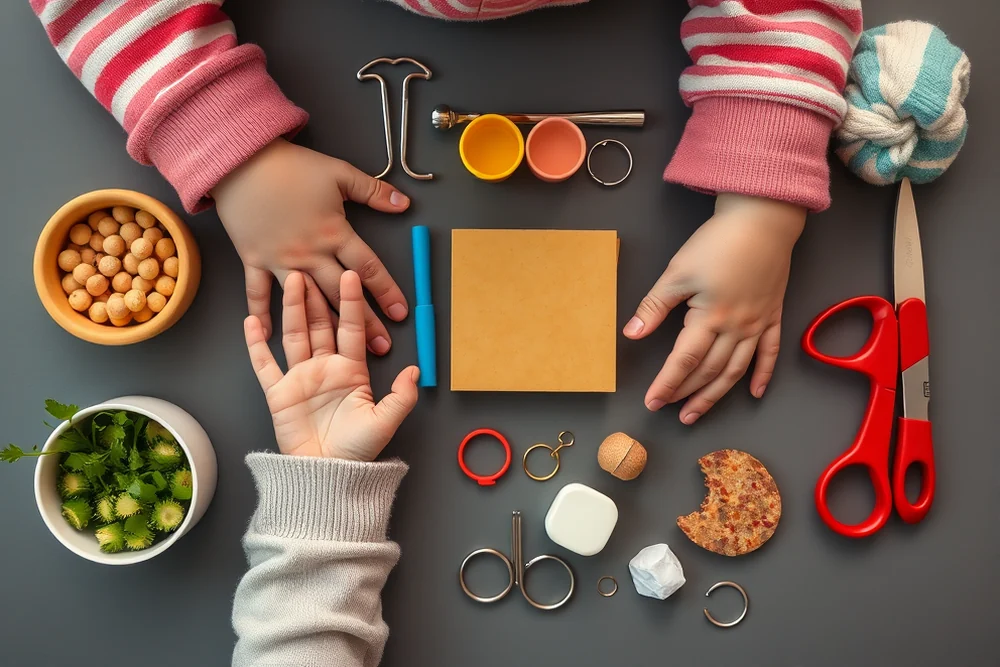
Every meltdown-prone moment in our house — leaving the park, turning off the tablet, getting into the car seat — improved once we stopped springing transitions on Milo and started narrating them in advance. The formula that worked: a five-minute warning ("five more minutes, then we go"), a one-minute warning. Then the transition itself, framed as a tiny choice ("do you want to walk to the car like a robot or a bunny?").
A visible countdown timer made a measurable difference for us — we use a $9 sand timer for anything under five minutes because toddlers can watch the sand fall and understand time passing in a way a beeping phone timer doesn't communicate. Abstract time ("in five minutes") means very little to a two-year-old; visible time does.
We also learned to never transition out of a preferred activity into an unpreferred one without a bridge activity in between. Going straight from "screen time" to "bath" produced tears roughly four times out of five in our own informal tracking; adding a 90-second bridge, like carrying a favorite stuffed animal to the tub together, dropped that to about once out of five.
When Routines Fall Apart: Travel, Illness, and Daylight Saving Time
Our first family trip after establishing routines was a disaster because I assumed the schedule lived in the laminated cards themselves, so I left them at home. It took four nights of a screaming, disoriented toddler in an unfamiliar room before I realized the fix was simple: I recreated the exact same six bedtime steps verbally, in the same order, without any props at all. Bedtime stabilized within two nights.
Daylight saving time knocked our whole system sideways for about five days each spring and fall until we started shifting bedtime by 10 minutes per day for four days leading up to the change, rather than the full 60 minutes all at once. That gradual approach, recommended by several pediatric sleep consultants I've since read, cut our post-DST adjustment period roughly in half.
⭐ Classic
The full three-card laminated system described above, built to last a year or more of daily use.
💰 Budget
Skip the contact paper and laminator entirely — draw the three icons directly on plain paper taped to the wall and simply redraw them when they get worn. Total cost: $0 if you already own paper and a marker.
⚡ Extra-Fast
For chaotic mornings or travel days, drop to two cards only — Body and Door — and skip the Fuel card by handing over a grab-and-go breakfast like a banana in the car.
✨ Depth
Add a fourth and fifth card for older toddlers (30+ months): a 'Kindness' card for one small helping task and a 'Choice' card where they pick tomorrow's outfit the night before, building in agency.
🥗 Light
No cards at all — just a fixed spoken order repeated in the exact same words each morning. Works for toddlers who resist physical props but still benefit from verbal sequencing.
| The mistake | Why it happens | The fix |
|---|---|---|
| Changing the order of steps to save time on a rushed day | Toddlers rely on sequence, not just presence, to predict what's coming next; skipping or reordering even one step reads as unpredictability and often triggers more resistance, not less. | Shorten the duration of each step instead — a 90-second tooth-brushing becomes 30 seconds, but it still happens third, in order, every time. |
| Introducing too many cards or steps at once | We tried launching a six-card morning system in week one and Milo simply stopped engaging with any of it; the cognitive load of learning six new symbols simultaneously was too high. | Start with two or three cards maximum and add one new step only after the existing ones run smoothly for at least a week. |
| Abandoning the routine after the first hard day | Every routine we've built had at least one rough patch, usually around day 10 to 14, that felt like proof the system wasn't working, but it was actually a normal part of habit consolidation. | Commit to a minimum 21-day trial before judging whether a routine is working, and keep a simple daily log so you can see real trendlines instead of relying on memory of the worst moments. |
| Relying entirely on verbal reminders instead of a visual or physical anchor | We spent four months just repeating instructions out loud and burning out from the constant narration, with little actual independence to show for it. | Add one physical anchor — a card, a timer, a checklist your toddler can touch — so the routine lives outside of your voice and your toddler can reference it without you. |
What You'll Need tap to check off
- 5 blank index cards (3x5)
- 1 black permanent marker
- 1 roll clear contact paper (or access to a laminator)
- 3 strips hook-and-loop (velcro) dots
- 1 sheet of stiff cardboard or foam board, about 8x24 inches
- 1 visual sand timer (5-minute)
Method tap a step when done
- Draw three simple icons, one per index card: a stick figure getting dressed for 'Body,' a bowl and spoon for 'Fuel,' and a shoe for 'Door.' Keep each drawing identical every time you use it — consistency of the image matters more than artistic quality.
- Cover each card in clear contact paper or run it through a laminator so it survives daily handling and the occasional toddler taste-test.
- Mount the cardboard strip horizontally at your toddler's eye level — measure their standing height and place the strip about 4 inches below eye level so they look slightly down at it.
- Attach the three cards left to right in the order the phases happen, and stick a matching velcro dot beside each one so your toddler can flip or remove the card once that phase is complete.
- Walk through the sequence together for three straight mornings, narrating each phase out loud as you point to the card, before expecting any independence — this is the 'cook' time where the habit actually forms.
- On day four, hand your toddler the job of flipping the card themselves and step back; resist the urge to remind them verbally unless 90 seconds of silence passes with no movement toward the next step.
Key Facts
Toddler Routines For Beginners
Common Questions
What age should I start a toddler routine?
How long does it actually take for a new routine to stick?
My toddler refuses to follow the visual schedule. What now?
Should the routine be identical on weekends?
References
- Tips for Relying on Routines and Rules (cdc.gov)
- PDF Tips for Making or Changing Routines - California WIC (docs.wic.ca.gov)
- PDF Tips for Infant & Toddler Teachers and Caregivers (PDF) (ed.gov)
- Schedules and Routines | HeadStart.gov - ECLKC (headstart.gov)
- PDF The Daily Routine (nj.gov)
Cite this guide
Steadytoddler (2026). Toddler Routines For Beginners. https://steadytoddler.com/toddler-routines-for-beginners/
Feel free to cite or share this guide.