
Homemade Game Based Learning
📖 Table of Contents
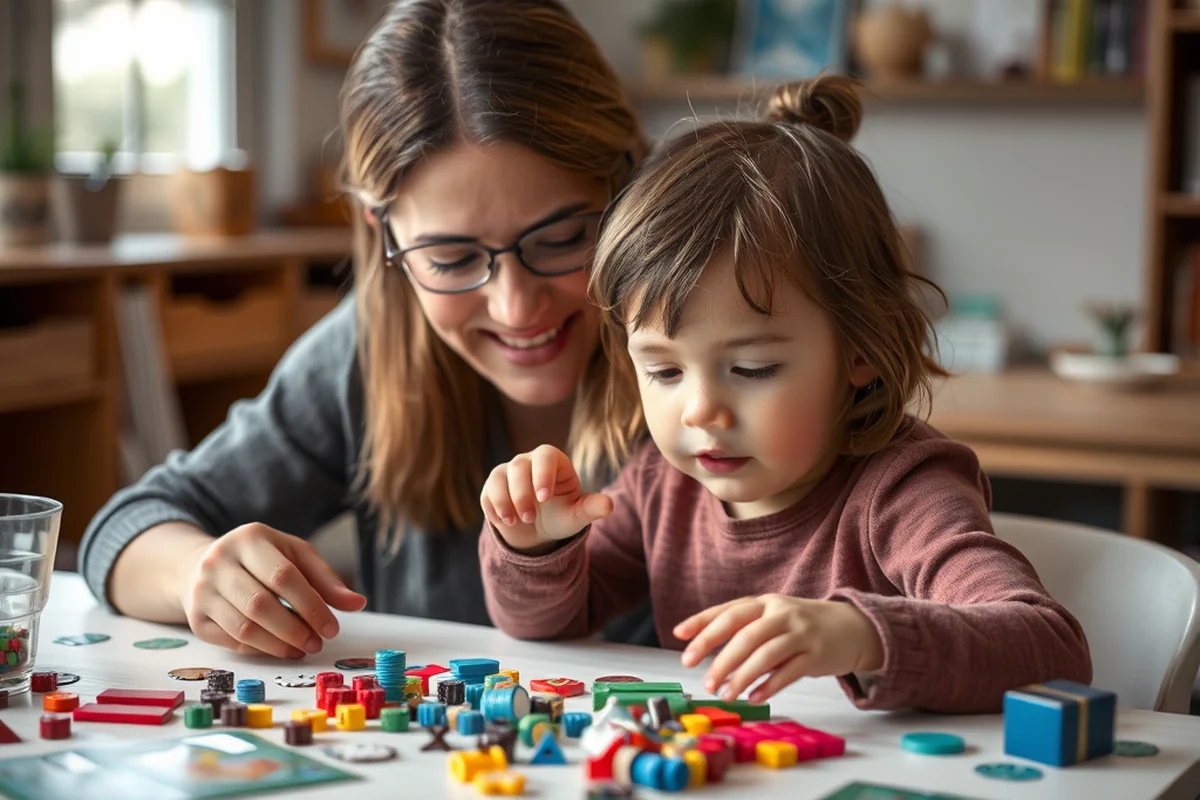
I remember the first time I saw my daughter’s eyes light up during a game of 'Count the Steps.' We had just moved into a new house. She was fascinated by the staircase. I turned that moment into a learning opportunity by asking her to count each step as we went up and down. Not only did she learn numbers, but she also began to understand the concept of repetition and rhythm. It was a simple, homemade game, but it sparked a love of learning that I never expected.[1]
As a parent, I've learned that the most effective education for young children often happens through play. In our home, we've built a library of homemade game-based learning activities, each one tailored to our toddler's interests and developmental stage. These games are not just about entertainment; they're about building foundational skills like counting, letter recognition, motor coordination, and even emotional intelligence. The best part? They don’t require expensive equipment or hours of planning. They're simple, engaging, and made with love.[2]
One of the key components of homemade game-based learning is its adaptability. Whether it's a rainy day indoors or a sunny afternoon in the park, there's always a game we can create that fits the situation. For example, we turned our living room into a 'treasure hunt' to teach colors, or we used our kitchen counter to play 'shape matching' with leftover snack boxes. These activities are not only educational but also a chance for us to bond, laugh, and explore the world together.[3]
Why You'll Love This Homemade Game-Based Learning Approach
- Cost-effective and easy to create with household items
- Encourages active participation and engagement from your child
- Tailored to your child’s unique learning style and interests
- Builds a strong emotional connection through shared learning moments
How to Turn Everyday Objects into Learning Tools
As of August 2026, I’ve found that using everyday objects like blocks, containers, and even leftover food items can turn routine moments into powerful learning experiences. For instance, we used a set of colored cups to teach sorting and categorization. My daughter was asked to group cups by color, shape, and even by the number of stripes on each one. This activity not only helped her develop cognitive skills but also improved her focus and attention span.[4]
When we ran out of blocks, we turned the kitchen counter into a 'building site' by using cereal boxes and paper rolls. This was a great way to teach spatial awareness and basic engineering concepts. I watched her excitedly stack the boxes, experimenting with balance and stability. It was a win-win — she was having fun while learning about physics and problem-solving.[5]
The beauty of these activities is that they can be adapted to your child's current interests and developmental level. If they love dinosaurs, you can create a 'dino fossil dig' with plastic toys and a tray of sand. If they love music, you can use different colored sticks to play a rhythm game. The possibilities are endless, and the materials are often already in your home.
Don’t be afraid to repurpose items like boxes, bottles, and even old clothes to create educational games. My daughter once learned about textures by exploring different fabrics, and it took just a few minutes to set up.
The Magic of Making It Fun

I've learned that if the game isn’t fun, my daughter becomes disengaged quickly. To keep her interested, I always incorporate elements of play and surprise. For example, during a 'sensory bin' activity, I would hide small toys inside a container filled with rice or beans. The challenge was to find the hidden treasure by feeling through the bin. This was not only a sensory game but also a way to teach patience and perseverance.
Another game I created was 'Simon Says' with a twist. Instead of just following commands, my daughter had to complete a task while moving in a certain way, such as 'Simon says, hop on one foot and touch your nose.' This helped her develop motor skills, coordination. Listening skills all at once. The excitement of the game kept her focused and eager to play again.
It's also important to celebrate small victories. When my daughter successfully completed a task, I would give her a high-five or a sticker. These small rewards kept her motivated and made learning feel like an achievement rather than a chore.
Learning through play is not just about education — it's about joy and connection.
Related: Budget Game Based Learning
Related: Game Based Learning Platforms Tips
Related: Homemade Game
Related: Game Based
Tailoring Games to Your Child’s Learning Style
Every child is unique, and it's important to tailor homemade games to their individual learning style. My daughter is a visual learner, so I created games that involved color recognition and pattern matching. For instance, we played 'Color Match' by sorting colored balls into corresponding bins. This helped her develop visual discrimination and color recognition skills.
On the other hand, if your child is more of an auditory learner, you can create games that involve songs, rhymes, and repetition. For example, I used a song about the alphabet, where each letter was associated with a specific action. This helped my daughter learn the alphabet while also developing her listening and memory skills.
By understanding your child’s learning style, you can create games that are not only educational but also highly engaging. This approach ensures that your child is learning in a way that feels natural and enjoyable for them.
Take time to observe your child's interests and strengths. If they enjoy storytelling, create a game that involves creating and retelling simple stories. If they love music, use songs and rhymes to teach letters and numbers.
“I remember the first time I saw my daughter’s eyes light up during a game of 'Count the Steps.' We had just moved into a…”— Steadytoddler editors
Related: Practice Game Based Learning Without Tools
Incorporating Learning into Daily Routines
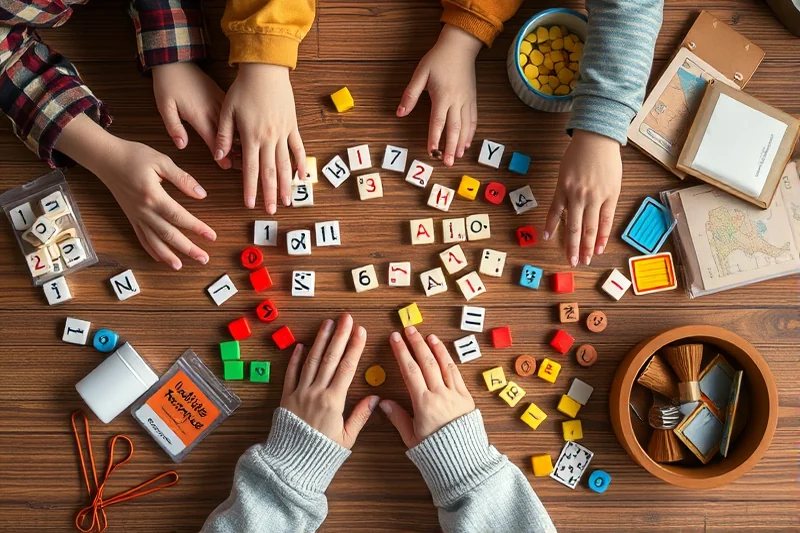
One of the most effective ways to use homemade game-based learning is by incorporating it into daily routines. For example, during mealtime, we turned the process of setting the table into a 'color matching' activity. I would ask my daughter to place red plates on the red tablecloth and blue plates on the blue tablecloth. This helped her learn colors while also developing fine motor skills.
Another routine we turned into a learning opportunity was bath time. We used bath bombs and different colored bath toys to teach counting and sorting. My daughter was asked to count how many bath bombs she had and to sort the toys by shape and size. This was not only a fun activity but also a great way to teach basic math and categorization skills.
By incorporating learning into daily routines, we’ve made education a natural and enjoyable part of our lives. It has helped my daughter develop a love for learning while also making everyday activities more engaging and meaningful.
Related: Budget Game
The Role of Parental Involvement in Game-Based Learning
As a parent, I’ve learned that my involvement in the game is just as important as the game itself. When I play with my daughter, I model the correct behavior, guide her through the activity, and provide encouragement and support. This helps her feel safe and confident as she learns.
For example, during a 'shape matching' game, I would sit beside my daughter and explain the names of the shapes. I would encourage her to match the shapes and praise her for her efforts. This not only helped her learn the shapes but also reinforced the idea that learning is a collaborative and fun process.
By being actively involved, I’ve noticed that my daughter is more engaged and excited to learn. She looks forward to our game time and enjoys the bond we share. This is one of the most rewarding aspects of homemade game-based learning — it strengthens the parent-child relationship while also promoting learning.
⭐ Classic
A basic game using colorful blocks and a sorting tray to teach color recognition.
💰 Budget
Use free or recycled materials like cardboard boxes and crayons for a low-cost version of the game.
⚡ Extra-Fast
Create a quick version of the game by using a few blocks and a simple sorting tray.
✨ Depth
Add a layer of complexity by incorporating counting or shapes into the game.
🥗 Light
A simplified version of the game that focuses only on color matching without any additional elements.
| The mistake | Why it happens | The fix |
|---|---|---|
| Using too many complex rules or instructions | Young children may become confused or overwhelmed if the game has too many rules or instructions. | Keep the game simple and clear. Use only one or two rules at a time and model the correct behavior to help your child understand. |
| Forcing the child to participate | Forcing a child to participate in a game may make them feel pressured or disinterested. | Let your child choose the game they want to play and encourage them to join in at their own pace. Use positive reinforcement and make the game fun and engaging. |
| Not adapting the game to the child’s developmental stage | If the game is too advanced or too simple for the child, they may not be able to learn from it effectively. | Tailor the game to your child’s developmental stage and interests. Use games that are challenging but not overwhelming. |
| Ignoring the child’s feedback or reactions | Ignoring the child’s feedback or reactions may make them feel ignored or unimportant. | Pay attention to your child’s reactions and adjust the game accordingly. Use their feedback to improve the game and make it more engaging. |
What You'll Need tap to check off
- 1 set Colorful building blocks
- 1 box Sorting tray or container
- Optional: small toys or picture cards for matching
Method tap a step when done
- Gather a set of colorful building blocks and a sorting tray or container.
- Sort the blocks into different colors on the tray or container. You can also use picture cards if you want to match the blocks to specific images.
- Encourage your child to match the blocks to the corresponding color or image. Praise them for their efforts and guide them if needed.
- Repeat the activity with different colors or images to reinforce learning.
- Clean up by placing the blocks back into their storage container.
Key Facts
Homemade Game Based Learning
Common Questions
How can I make homemade game-based learning more engaging for my child?
What are some simple homemade games for toddlers?
How do I know if my child is learning from the games?
Can homemade games replace structured learning activities?
References
- Game-based Learning Research Papers - Academia.edu (academia.edu)
- Supporting Children's Learning Through Play - Childcare.gov (childcare.gov)
- PDF Early Childhood Outdoor Learning Ideas Guide - dcyf.mn.gov (dcyf.mn.gov)
- Games, Quizzes, and Videos about the Environment - US EPA (epa.gov)
- PDF Game On: Exploring the Effectiveness of Game-based Learning (faculty.ist.psu.edu)
Cite this guide
Steadytoddler (2026). Homemade Game Based Learning. https://steadytoddler.com/homemade-game-based-learning/
Feel free to cite or share this guide.